

Relay Attacks, CAN Injection, Key Emulation & Jamming
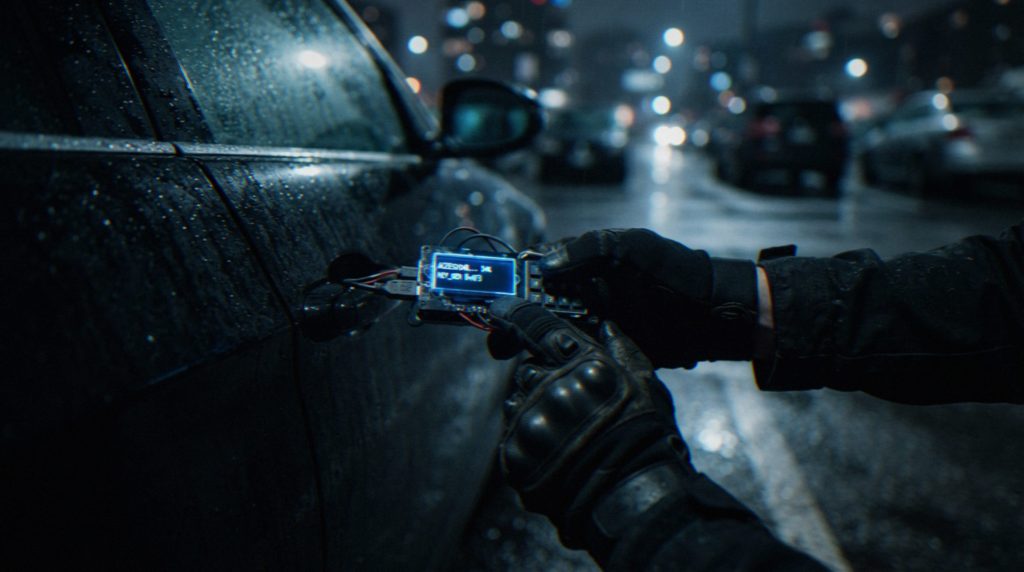
Modern car theft does not always involve smashed windows or stolen keys. Increasingly, criminals target the electronic systems that control access, starting and security.
That can include relay attacks on passive keyless entry, key emulation, attacks on a vehicle’s CAN network and signal jamming. The important point for drivers is that these methods do not all work in the same way, so there is no single security product that addresses every risk.
Understanding the difference makes it easier to choose sensible protection rather than simply adding another gadget to the car.
So - How Are Cars Stolen Electronically in 2026?
Electronic car theft generally involves manipulating the communication between the key, vehicle and electronic security systems.
Common methods include:
- Relay attacks, where the signal between a keyless vehicle and its key is extended or relayed
- Key emulation or cloning, where criminals attempt to reproduce or imitate authorised key data
- CAN injection, where electronic communication within the vehicle is targeted
- Signal jamming, where the locking signal is disrupted so the vehicle may remain unlocked
These techniques vary considerably between vehicles. A method that affects one make, model or generation may not work against another.
This is why effective car theft prevention is increasingly about layers of security, rather than relying entirely on one factory system.
What Is a Relay Attack?
A relay attack targets vehicles with passive keyless entry and start systems.
Normally, the vehicle detects that its authorised key is nearby and allows the doors to unlock or the engine to start. During a relay attack, electronic equipment is used to make the vehicle believe the genuine key is closer than it really is.
The key itself does not necessarily need to be stolen.
Police guidance describes keyless car theft as a process where a device fools the vehicle into thinking its key is nearby. Police.uk therefore advises owners of susceptible vehicles to keep keys away from the vehicle and use a working signal-blocking pouch when appropriate.
See Official GuidanceWhy Keyless Vehicles Can Be Vulnerable
Passive keyless systems are designed around convenience. The driver does not need to remove the key from a pocket or bag before opening or starting the car.
That means the vehicle and key have to communicate wirelessly.
If that communication can be manipulated, the convenience feature can become an attack route. However, manufacturers have introduced different countermeasures over time, so drivers should check the security features fitted to their exact vehicle rather than assuming every keyless system behaves identically.
Is Key Cloning the Same as Relay Theft?
No.
A relay attack extends or manipulates communication involving the genuine key. Key cloning or key emulation involves creating or reproducing something the vehicle recognises as authorised.
The exact method depends heavily on the vehicle's security architecture.
For motorists, the practical distinction is important because storing a key in a signal-blocking pouch can help against certain relay attacks, but it does not address every possible method of electronic theft.
Drivers buying a second-hand car may consider having its keys reprogrammed, because control over previously issued keys can be relevant to vehicle security.
What Is a CAN Injection Attack?
Modern vehicles contain electronic modules that communicate through internal data networks. One of the most common is the Controller Area Network, or CAN bus.
This network allows different parts of the car to exchange information. Depending on the vehicle, that can include body electronics, engine systems, security functions and other control modules.
A CAN injection attack targets this internal communication rather than relying on the owner's key signal.
At a high level, criminals may attempt to access vehicle wiring and introduce electronic messages that the vehicle interprets as legitimate instructions.
The Crime and Policing Act 2026 specifically refers to electronic equipment used to access a vehicle's wiring system alongside signal jammers and signal amplifiers.
That is one reason a Faraday pouch should not be viewed as complete keyless car security. It addresses a particular radio-signal risk, not attacks that target the vehicle itself.
Read More HereWhat Does Signal Jamming Do?
Signal jamming can target a different part of the theft process.
Rather than trying to start the vehicle immediately, a jammer may interfere with the signal sent when the owner attempts to lock it.
The driver walks away believing the vehicle has locked, while it may actually remain accessible.
Police guidance therefore recommends physically checking that the vehicle has locked rather than relying solely on the flashing lights, mirrors or sound you normally associate with locking.
This is a simple habit, but it addresses a risk that expensive aftermarket equipment cannot compensate for if the vehicle was never successfully locked in the first place.
Why Electronic Vehicle Theft Is Receiving More Attention in 2026
Electronic vehicle theft has become significant enough to receive specific attention in UK legislation.
The Crime and Policing Act 2026 includes provisions covering electronic devices intended for use in vehicle offences. The legislation refers to possession, manufacture, adaptation, importation and supply in circumstances connected with vehicle theft.
Government guidance specifically identifies devices including signal jammers and signal amplifiers. It also notes that criminals continue to exploit weaknesses in vehicle technology and security systems.
There is an important legal detail, however. As of September 2026, section 149 of the Act is shown in the legislation database as prospective, meaning its commencement status should be checked before describing those offences as already in force.
The wider point is clear. Electronic equipment associated with vehicle theft is now being addressed specifically in legislation rather than treated solely through more general theft offences.
Theft levels vary by location, vehicle type and time period. Electronic methods form a meaningful part of modern vehicle crime and owners should protect against the methods relevant to their vehicle.
Why Factory Security May Not Be the Only Layer to Consider
Factory security has become increasingly sophisticated, but criminals and manufacturers continually respond to one another.
A newer factory system may protect effectively against an older theft technique while another attack focuses on a different part of the vehicle.
This is why police guidance still recommends additional measures such as steering wheel locks, immobilisers and other forms of physical or electronic security for keyless vehicles.
The aim is not to assume the factory system is ineffective. It is to avoid making one security mechanism the only barrier between an attacker and the vehicle.
Which Security Measures Help Against Which Risks?
Different products perform different jobs.
Ghost Immobiliser
A Ghost Immobiliser adds an additional authorisation requirement before the vehicle can be driven.
That makes an immobiliser particularly relevant when the concern is an attacker gaining electronic access to the vehicle or obtaining a means of starting it.
It is primarily a theft-prevention layer, rather than a vehicle-recovery system.
StarLine Security
StarLine security systems can provide a more configurable security approach, with functions that can combine alarm, immobilisation, monitoring and tracking depending on the system and installation.
This makes StarLine particularly relevant where the aim is to build several security functions around the individual vehicle rather than relying on one form of protection.
Vehicle Trackers
A tracker has a different purpose.
If an immobiliser is designed to make unauthorised driving harder, a tracker is primarily concerned with location, monitoring and potential recovery if the vehicle is taken.
Lehane Autos installs tracking options including Track Manager and Meta Trak.
This distinction matters when choosing security:
An immobiliser helps prevent unauthorised use. A tracker helps locate and recover a vehicle.
One does not automatically replace the other.
Vehicle Alarms
An alarm provides detection and deterrence.
Depending on its sensors and configuration, it may alert to unauthorised entry, movement or interference. However, an alarm should again be considered one part of the security system rather than a substitute for immobilisation, tracking or physical protection.
What Does Layered Vehicle Security Actually Mean?
Layered security simply means making a thief overcome more than one independent obstacle.
For example, a vehicle might have:
- Its original factory security
- Secure key storage
- A visible steering wheel lock
- An additional immobiliser
- An alarm or monitoring system
- A hidden vehicle tracker
An attacker who manages to overcome one layer has not necessarily defeated the others.
The ideal combination varies. A daily-use family car, performance vehicle, commercial van and high-value car may have very different security priorities.
Practical Ways to Reduce Electronic Car Theft Risk
Electronic car theft can sound highly technical, but some of the most useful precautions are straightforward.
Protect Keyless Fobs
Keep the main key and spare away from doors, windows and the parked vehicle.
For susceptible keyless systems, use a suitable signal-blocking pouch and check periodically that it still blocks the key correctly.
Check the Car Is Locked
Do not automatically assume pressing the remote means the vehicle successfully locked.
Check the handles or locking status before walking away, particularly in unfamiliar locations.
Add Physical Security
A strong steering wheel lock or other visible physical barrier adds something an electronic attack cannot simply bypass through software or radio communication.
It can also make the vehicle less attractive compared with one requiring less effort.
Choose Parking Carefully
Use a locked garage where available.
Otherwise, favour secure, well-lit parking and position the vehicle so that access or removal is more difficult where practical.
Keep Software Updated
Vehicle manufacturers may release security-related software or firmware updates.
If you are unsure whether your model has an outstanding update or security improvement, ask the manufacturer or dealer responsible for the vehicle.
Consider Aftermarket Protection
An immobiliser, alarm or tracker can provide additional protection where appropriate.
The useful question is not simply, "What is the best device?"
It is:
What method am I trying to protect this particular vehicle against?
That leads to much better decisions about car theft prevention.
Common Mistakes When Protecting a Keyless Car
One of the biggest mistakes is treating a single product as a complete solution.
For example:
- A Faraday pouch does not prevent every form of electronic attack
- A tracker does not necessarily stop a car being stolen
- An immobiliser cannot tell you where the vehicle is if it is physically removed
- An alarm does not provide the same function as immobilisation
- Factory security does not make sensible physical precautions unnecessary
The strongest approach is usually to identify the vehicle’s vulnerabilities and combine measures that address access, starting, detection and recovery.
FAQs
Can a Faraday Pouch Stop Relay Theft?
A working signal-blocking pouch can help prevent certain relay attacks by preventing communication with the key while it is stored. It does not protect against every electronic theft technique, so it should be considered one security layer.
Can CAN Injection Bypass the Key?
CAN-based theft targets electronic communication within the vehicle rather than simply extending the genuine key's radio signal. The exact vulnerability and protection available depend on the vehicle.
Does a Steering Lock Still Help?
Yes. A physical steering lock adds a separate barrier even if an attacker manages to overcome an electronic system. Police guidance continues to recommend physical security alongside electronic precautions.
Is an Immobiliser Better Than a Tracker?
They perform different roles. An immobiliser is intended to prevent unauthorised use or starting, while a tracker helps monitor and locate the vehicle if it is moved or stolen. Some owners use both as part of layered security.
Do All Keyless Cars Have the Same Risk?
No. Security systems vary between manufacturers, models, production years and software versions. Owners should check the security features and available updates for their specific vehicle.
Can Thieves Jam a Car Locking Signal?
Electronic interference can prevent a locking signal from operating as expected. Manually checking that the vehicle has actually locked is a simple precaution recommended in police guidance.
Build Security Around the Vehicle, Not Just the Latest Theft Method
Electronic vehicle theft continues to evolve, but reacting to every new technique with a single product is not the most useful approach.
Start with the basics, protect the keys, check the vehicle is locked, use sensible physical security and keep manufacturer software up to date. Then consider whether additional immobilisation, alarms or tracking would address the risks relevant to your vehicle.
For owners who want help understanding the difference between the available options, Lehane Autos can advise on Ghost Immobilisers, StarLine security, Track Manager, Meta Trak and immobiliser installation.
